
When Is the Best Time to Redesign Your Landscape in Annapolis?
August 27, 2026The traditional green lawn has been a staple of American landscaping for generations, but more homeowners are beginning to question whether every corner of their property really needs grass. Areas that stay too shady, slopes that are difficult to mow, consistently wet spots, and sections that require constant watering can turn lawn care into an ongoing battle.
For Annapolis homeowners, replacing selected areas of turf with thoughtfully designed plantings can create a landscape that’s more interesting, functional, and appropriate for the Chesapeake Bay region.
At Garden Girls LLC, we help homeowners rethink traditional yards through professional landscape design, installation, native plantings, and ongoing maintenance.
Why Are Homeowners Reducing Lawn Areas?
You don’t necessarily need to eliminate your entire lawn. Instead, the goal is to identify areas where grass isn’t providing much value.
A property may have turf that requires repeated seeding, watering, fertilizing, or mowing without ever looking particularly healthy. Replacing those areas can reduce maintenance while creating opportunities for more color and texture.
Common candidates include:
- Shady areas beneath mature trees
- Steep or difficult-to-mow slopes
- Narrow side yards
- Wet areas with drainage problems
- Lawn edges that are difficult to maintain
- Large open areas that homeowners rarely use
The right alternative depends on the conditions of each location.
Replace Grass with Native Groundcovers
Groundcovers can be an excellent solution where maintaining traditional turf is difficult.
Instead of leaving exposed soil, carefully selected groundcovers create a living layer of vegetation. Once established, they can help suppress weeds, protect soil, and visually connect different areas of the garden.
Plant selection matters. Sun exposure, moisture, soil conditions, and foot traffic should all be evaluated before choosing a groundcover.
Using plants suited to Maryland’s environment can also complement a larger bay-friendly landscape design.
Create Larger Garden Beds
One of the easiest ways to reduce lawn is simply to expand existing planting beds.
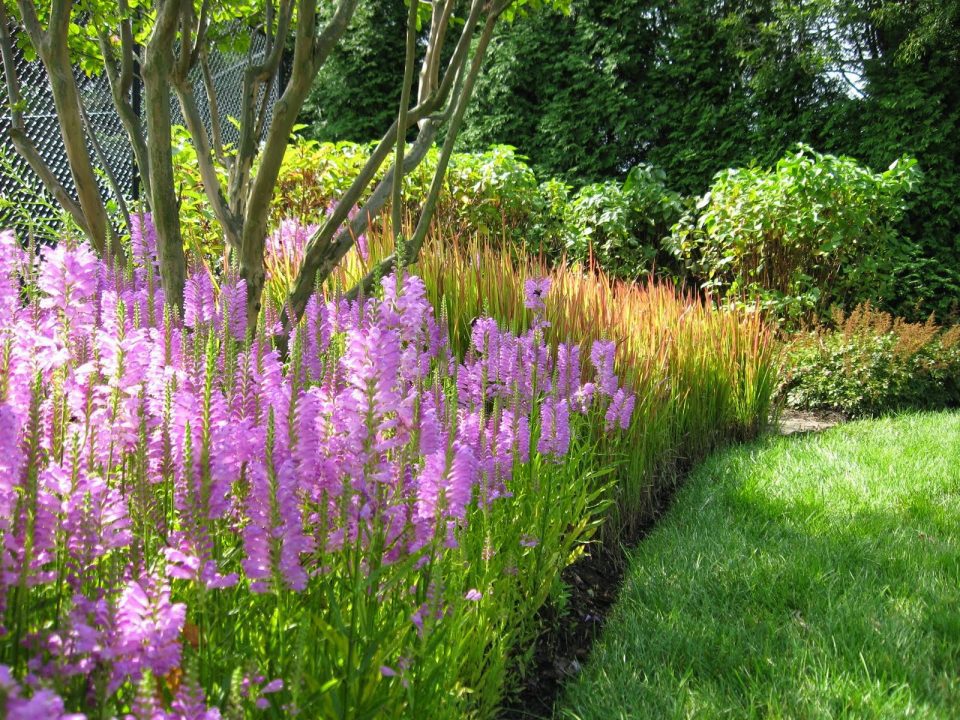
Wider beds provide room for combinations of shrubs, perennials, ornamental grasses, and seasonal plants. Instead of a thin line of landscaping around the foundation, deeper beds can create layers that make the entire property feel more established.
This approach can work beautifully with several garden styles.
An English or cottage garden can use expanded beds for abundant flowers and varied textures. A more restrained landscape can rely on repeating groups of plants for a cleaner appearance.
Either way, less turf can mean more opportunities for creative landscape design.
Consider a Native Plant Garden
Converting part of a lawn into a native garden is another option gaining attention among environmentally conscious homeowners.
Native plants are adapted to regional conditions and can provide valuable resources for birds, butterflies, bees, and other wildlife.
A professionally designed native landscape doesn’t have to look uncontrolled. Plants can be arranged intentionally by height, bloom period, color, and texture to produce a garden that feels polished while providing ecological benefits.
For properties around Annapolis, native plantings can also contribute to a broader effort to create landscapes that are friendlier to the Chesapeake Bay watershed.
Address Wet Areas Instead of Fighting Them
If one section of your lawn repeatedly becomes soggy after rain, reseeding it may not address the real problem.
Water movement should be evaluated before deciding what belongs there.
Depending on the property, a wet area may offer an opportunity for moisture-tolerant planting or a larger stormwater management strategy. Garden Girls LLC’s stormwater control services can help determine how landscaping can work with the property’s drainage patterns rather than continually fighting them.
Turning a problem area into an intentional garden can improve both appearance and function.
Use Paths to Connect the Landscape
Reducing turf can also create opportunities to introduce pathways.
Paths help organize a garden and encourage people to experience areas of the property that might otherwise be ignored. They can lead through cottage plantings, connect different outdoor spaces, or provide a quiet route through a Japanese-inspired garden.
Surrounding pathways with plants also creates a much richer experience than simply crossing an open lawn.
Don’t Forget Long-Term Maintenance
“Lawn alternative” doesn’t automatically mean “no maintenance.”
Plants still need appropriate care, especially while they’re becoming established. Gardens may require pruning, weeding, mulching, seasonal cleanup, and occasional adjustments as plants mature.
The advantage is that you’re investing that effort into a diverse landscape rather than repeatedly trying to make grass grow somewhere it doesn’t want to.
Professional maintenance can preserve the original design while keeping the landscape healthy and attractive.
Rethink Your Annapolis Yard
Your lawn doesn’t have to disappear completely. In many landscapes, grass remains useful for recreation, pets, entertaining, and open space.
The goal is balance.
By replacing difficult or unnecessary lawn areas with native plants, groundcovers, expanded garden beds, and thoughtfully designed pathways, you can create an Annapolis landscape with greater character and purpose.
Garden Girls LLC provides landscape design, installation, maintenance, stormwater control, Japanese gardens, English and cottage gardens, and bay-friendly and native plantings in Annapolis.
If you’re tired of struggling with sections of lawn that never seem to thrive, it may be time to stop fighting the conditions and start designing around them. A more beautiful and functional landscape could already be hiding beneath all that grass.